

Did you know that countless expatriate entrepreneurs in the Middle East are still paying exorbitant annual fees for local sponsors they no longer legally need? For decades, the traditional business model in the GCC required a local partner to hold a 51% stake in any mainland company. This outdated requirement has created a lingering “Phantom Sponsor” myth that continues to cost businesses millions in unnecessary overhead. Today, the economic landscapes of the United Arab Emirates and the Kingdom of Saudi Arabia have fundamentally shifted. Both nations have aggressively updated their foreign direct investment (FDI) laws to attract global talent and capital. Understanding these new rules isn’t just a legal necessity; it is a critical strategic advantage for your HR and expansion planning.
Dismantling the Myth in the United Arab Emirates
The UAE’s Commercial Companies Law saw a historic amendment, effectively abolishing the mandatory requirement for an Emirati shareholder in mainland companies. You can now establish a business in Dubai without a sponsor, retaining full control over your operations and profits.
However, 100% foreign ownership in the UAE is not a blanket rule applied blindly to every sector. It is heavily dependent on the specific business activity your company undertakes.
Key Factors for UAE Market Entry
When structuring your HR and legal frameworks for the UAE, keep these critical points in mind:
The Positive List: The Department of Economic Development (DED) in each emirate maintains a list of thousands of commercial and industrial activities eligible for full foreign ownership.
Strategic Impact Activities: Sectors like defense, telecommunications, and oil exploration are still subject to strict local ownership regulations.
Capital Requirements: Some industrial activities may require specific minimum share capital to qualify for 100% ownership status.
Navigating Saudi Arabia Foreign Investment Rules
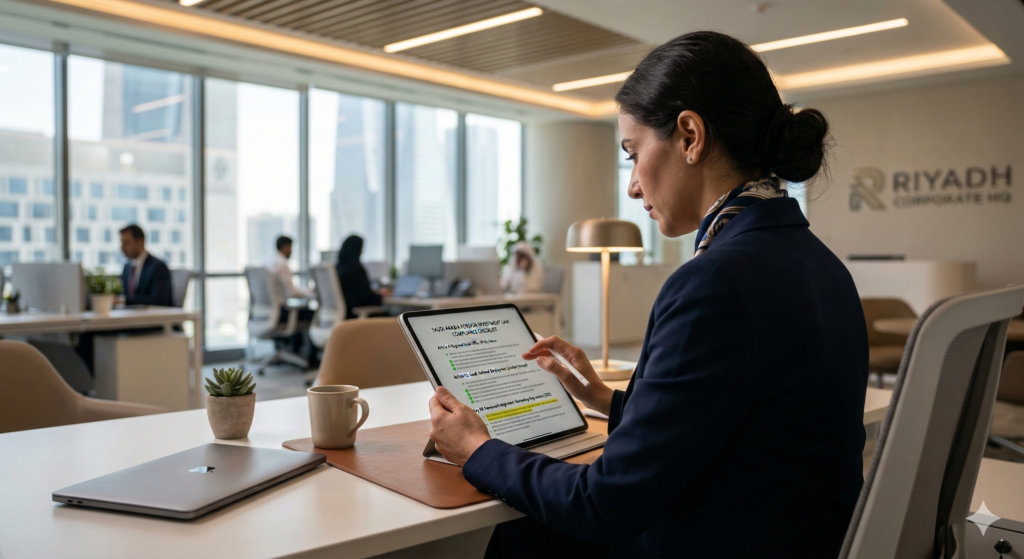
Similarly, Saudi Arabia’s Vision 2030 has revolutionized its approach to international business. The Kingdom is actively encouraging 100% foreign ownership across a massive array of sectors to diversify its economy away from oil.
Securing full ownership in KSA requires navigating the Ministry of Investment of Saudi Arabia (MISA). Acquiring a MISA license is the golden ticket to operating independently within the Kingdom.
Essential Steps for KSA Compliance
To ensure your HR compliance in the Middle East aligns with Saudi regulations, your team must prepare for:
Strict Saudization (Nitaqat) Compliance: Even with 100% foreign ownership, your hiring practices must rigorously align with local nationalization quotas.
Premium Residency Options: Explore the new premium residency tiers for key executives, which tie into your broader investment strategy.
Audited Financials: Demonstrating financial health and a clear business plan that adds value to the Saudi economy is non-negotiable for approval.
26 Years of Insight: The HR Reality of Restructuring Ownership
When transitioning from a sponsored model to a 100% foreign-owned entity, the legal paperwork is only half the battle. The most overlooked friction point during this transition is the massive overhaul required for your internal HR and labor setups.
Over the last two decades operating within the UAE and KSA, I have seen companies celebrate their new licenses, only to realize their labor files, employee visas, and banking mandates are entirely paralyzed. When you remove a local sponsor, you are often required to create entirely new establishment cards with the Ministry of Human Resources and Emiratisation (MOHRE) in the UAE or the Ministry of Human Resources and Social Development (MHRSD) in KSA.
You must physically transfer every single employee’s visa from the “old” sponsored entity to the “new” fully owned entity. This process resets end-of-service gratuity calculations unless specific legal addendums are drafted to protect employee tenure. Do not begin an ownership transfer without a bulletproof, month-by-month HR migration plan, or your payroll and visa processing will grind to a sudden halt.
Conclusion
The era of the mandatory local sponsor is largely over for standard commercial and industrial enterprises in the UAE and KSA. By understanding the specific FDI guidelines and MISA requirements, businesses can secure 100% foreign ownership, maximize their profitability, and maintain total operational control. However, true success requires careful attention to the resulting HR and visa migration processes.
About the Author
“As an HR Manager and the visionary behind PulseMina HCM, our founder brings 26 years of extensive HR leadership experience spanning the UAE and KSA. Their expertise lies in talent strategy, organizational scaling, and navigating complex Middle Eastern labor regulations for modern enterprises.”
Ready to simplify your regional expansion?
Managing a cross-border workforce, tracking complex visa transitions, and ensuring total compliance with localized labor laws doesn’t have to be a headache. Discover how PulseMina HCM can automate your HR processes and safeguard your compliance across the UAE and KSA.